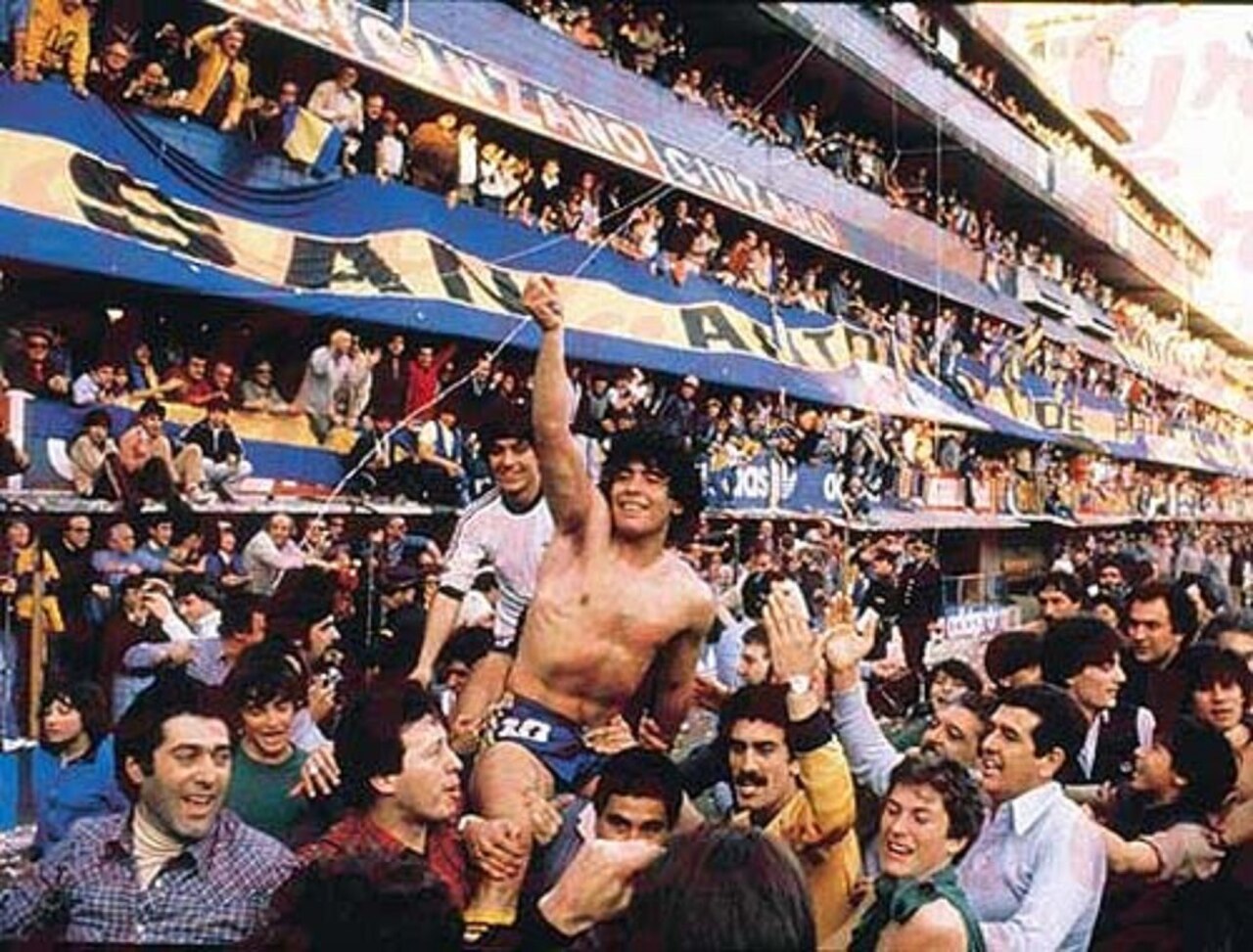
We remember Diego Maradona’s life. The sentence still feels unfinished because football has not replaced him. Diego Armando Maradona was born on 30 October 1960 in Villa Fiorito, on the southern edge of Buenos Aires. Poverty was not a metaphor in that childhood. It was dust, crowded rooms, and a ball that never stayed still. His parents Don Diego and Doña Tota raised a large family with stubborn love. Neighbours called the small left-footed boy El Pibe de Oro before the world learned the nickname. Argentinos Juniors gave him a stage while he was still a teenager. First-team football arrived at fifteen, and the league noticed immediately. Close control in tiny spaces looked like a private language. Defenders arrived late and left embarrassed. Boca Juniors then claimed him as a local son in 1981. The Metropolitano title that year turned La Bombonera into a cathedral of noise. Fans carried him on their shoulders as if the club had invented joy. Barcelona paid a world-record fee in 1982 and discovered both genius and fragility. A brutal tackle by Andoni Goikoetxea broke his ankle and tested his recovery. Even injured, he remained the player teammates watched in training. Spain never fully owned his story. Italy would. Napoli signed him in 1984 when the south of the country still waited for a football miracle. He did not arrive as decoration. He arrived as a project the city could believe in. Serie A was mean, tactical, and unforgiving. Maradona made it sing. The 1986–87 scudetto ended a hunger that had lasted decades. Another league title followed in 1990 with a UEFA Cup between them. Murals still cover Naples because gratitude there has a long memory. Number ten in light blue became a civic identity, not only a shirt. We remember that club chapter because it proved one player can lift a whole city without becoming fiction.
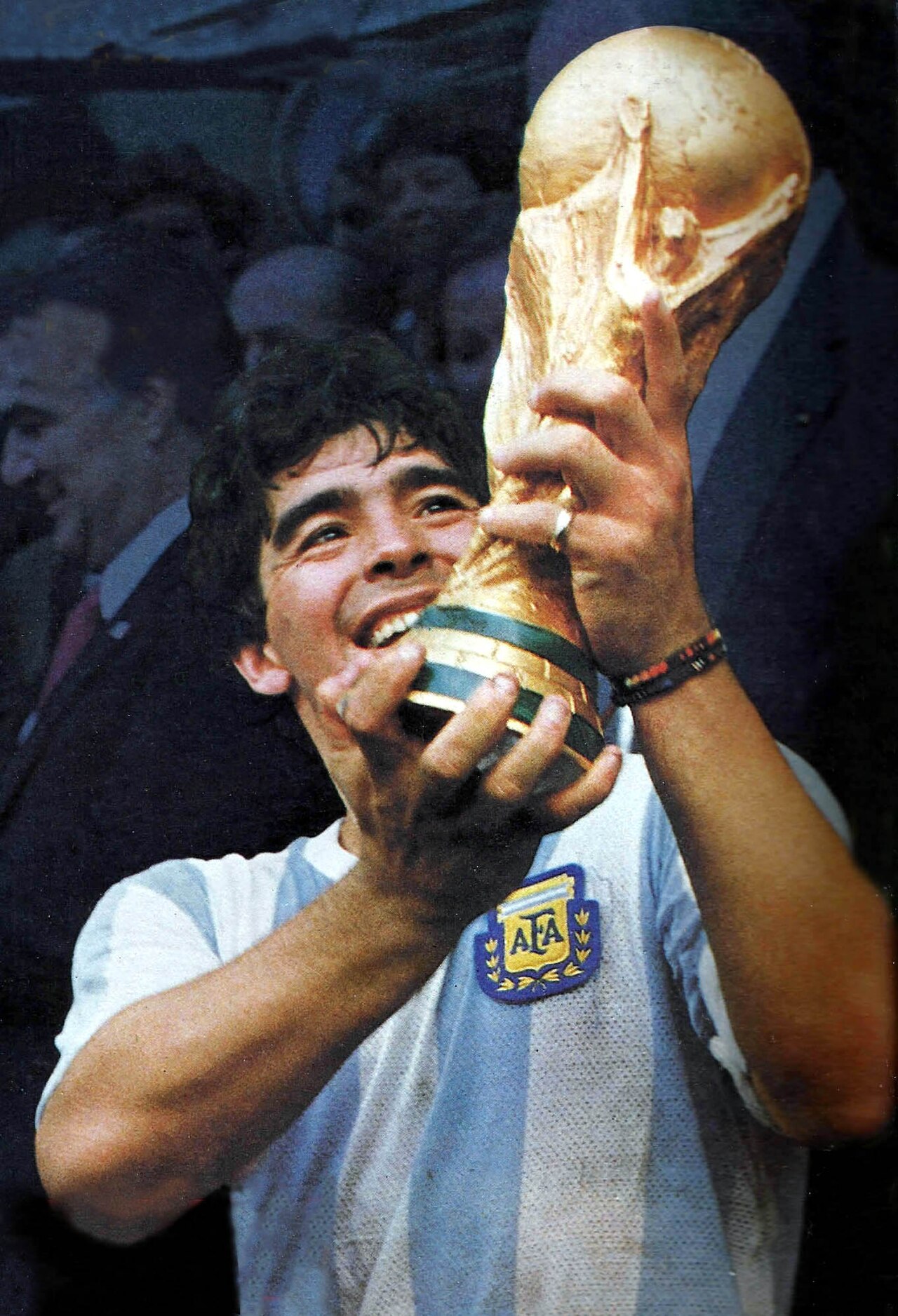
Mexico 1986 is the chapter the planet still recites by heart. Argentina arrived with talent and left with a trophy that felt destined. Maradona captained a side that needed his courage as much as his left foot. The quarter-final against England on 22 June remains the most argued ninety minutes in World Cup history. Four minutes produced two goals that still travel as a pair. First came the Hand of God, a leap and a fist that the referee missed. Then came the Goal of the Century, a run from his own half that turned English challenges into scenery. Commentators ran out of language before he reached the box. Peter Shilton, Terry Butcher, and Terry Fenwick became supporting characters in a solo film. The semi-final against Belgium brought another masterclass of dribbling under pressure. West Germany waited in the Azteca final and scored twice after Argentina led. Jorge Burruchaga finished the winner after Maradona’s vision split the defence. He lifted the golden trophy with both hands and an unrepeatable smile. The adidas Golden Ball confirmed what the footage already showed. He was the tournament. He was also a man who played through fouls that would empty modern medical rooms. Mexico City heat, thin air, and marking plans all failed to shrink him. We remember that summer because it still teaches children what imagination looks like at full speed. Historians argue about the handball and then fall silent about the slalom. Both moments belong to the same complicated person. Greatness here was not clean. It was unforgettable. Unforgettable is why we keep saying his name. The 1990 World Cup in Italy added a final and a heartbreak against West Germany. Even defeat could not unwrite 1986. Argentina without Maradona in those years is a sentence that does not parse. He made a national team look like an idea with a heartbeat. That heartbeat is what mourning still tries to hold.
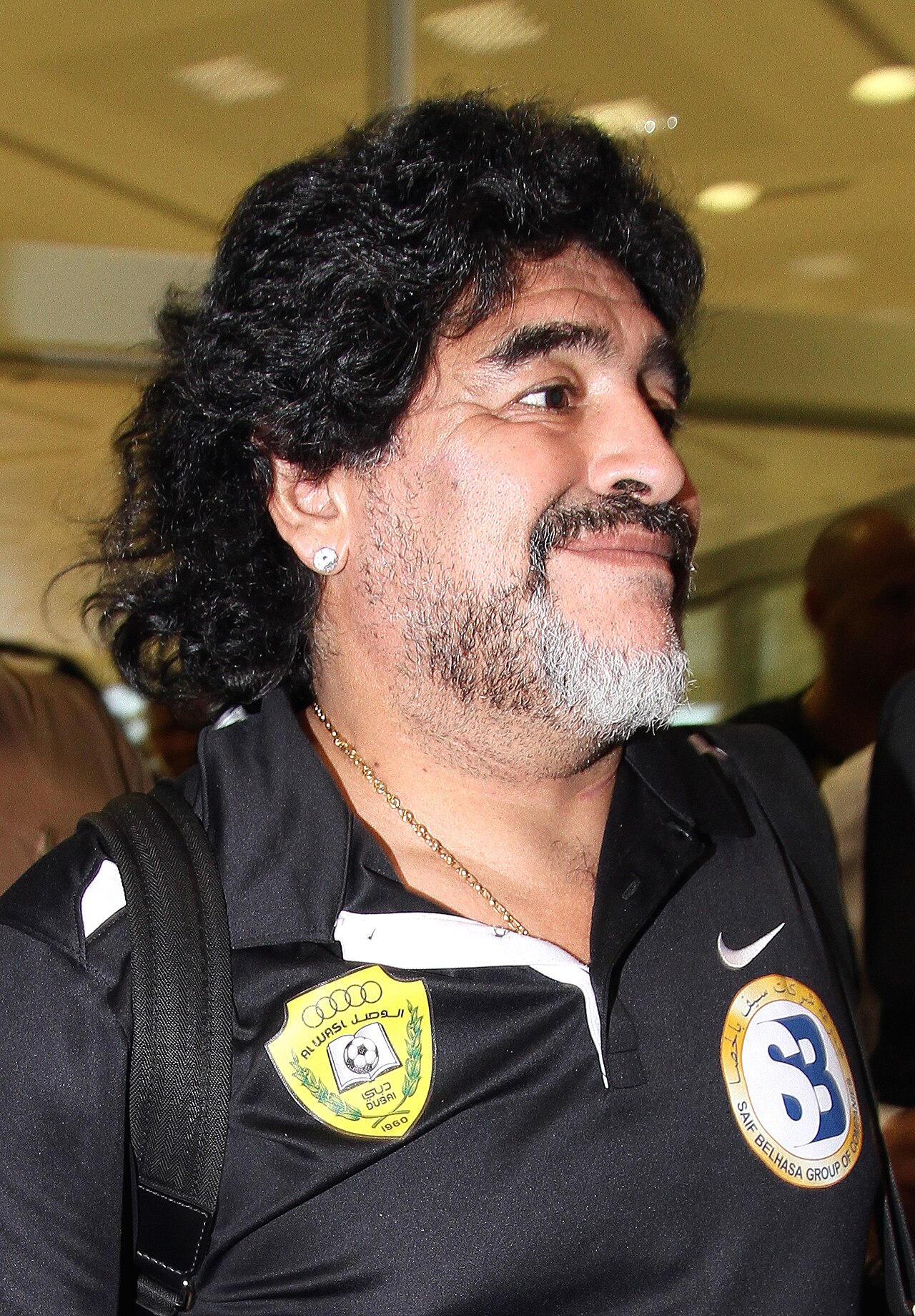
The life after the peak was louder, harder, and still fiercely loved. Sevilla, Newell’s Old Boys, and a Boca return sketched a late playing map. Addictions, bans, and courtrooms entered the public story with cruel regularity. Football fans often wanted only the magician and received the whole human being. He coached Argentina at the 2010 World Cup with theatrical passion on the touchline. Later spells included clubs in the United Arab Emirates, Mexico, Belarus, and Argentina again. The methods were uneven. The loyalty of crowds was not. Interviews mixed politics, jokes, tears, and sudden tenderness. He spoke for the poor because he never fully left Villa Fiorito in his head. Cuba, recovery clinics, and hospital corridors became chapters he did not hide well enough. Friends tried to protect him. The world kept watching. On 25 November 2020 he died at sixty in Tigre, in the province of Buenos Aires. Argentina declared national mourning. Naples renamed its stadium Stadio Diego Armando Maradona. Murals in La Boca gained fresh flowers overnight. Players from Messi to local amateurs posted the same stunned silence. A wake at the presidential palace showed how a footballer can become a country’s unfinished conversation. We do not remember him as a saint. We remember him as the most vivid footballer many eyes ever saw. Vivid means the stepover, the pause, the sudden drop of the shoulder. Vivid also means the contradictions that biographies cannot sand away. Children in Buenos Aires still copy the left foot on uneven lots. Children in Naples still point at the stands as if he might appear. Museums keep shirts. Streets keep songs. Songs keep him younger than the calendar. That is what remembrance does when a life was this large. It refuses to let the last hospital bulletin be the final word. The final word, for football people, is still a number ten drifting inside from the left.
So how should we tell Diego Maradona’s life without turning it into a statue? Tell the poverty without romance and the talent without denial. Tell Boca’s shoulders and Napoli’s scudetti. Tell Barcelona’s injury and Mexico’s two immortal minutes. Tell the bans without using them to erase the ball. Tell the father, the son, the captain, and the patient. Tell Doña Tota’s kitchen and the Azteca’s roar in the same paragraph. Great lives in sport are rarely tidy. His was a storm with perfect close control. Close control is the technical fact. Storm is the human fact. Both are true, and remembering him requires both. Coaches still use his clips to explain how a body can hide a ball. Poets still use his name when they need a synonym for popular genius. Rival fans who cursed him in 1986 now admit the run against England was art. Art does not ask permission from the rulebook every second. The handball remains a stain and a folk tale at once. The slalom remains a gift. Gifts like that arrive once a century if a culture is lucky. Argentina was lucky and wounded by the same man. Naples was rescued and branded by the same shirt. The rest of the world received television images that still look invented. They were not invented. They were Maradona on a dry pitch with a low centre of gravity. Gravity lost those arguments. We remember that defiance more than any statistic. Statistics never captured the pause before he accelerated. The pause is what imitation always misses. Imitation keeps trying anyway, which is how sporting memory reproduces itself. Every new number ten walks into a comparison he did not choose. That comparison is part of the tribute. The tribute is not that he was perfect. The tribute is that football felt more alive when he had the ball. Feeling more alive is a rare public service. He provided it until his body and his luck ran out. Then the streets took over the job of remembering. Streets in Fiorito, La Boca, and Quartieri Spagnoli still know the work. We join them from here, in sentences, because silence would be the wrong respect. Respect, today, is to say his name and tell the life honestly. Diego Armando Maradona, 1960 to 2020. We remember him.
We remember the boy who dribbled past hunger before he dribbled past fullbacks. We remember the teenager who made Argentinos Juniors feel like a national event. We remember Boca in 1981 and a stadium that refused to sit down. We remember the broken ankle and the refusal to stay broken. We remember Naples learning to win and refusing to forget. We remember Mexico City, the fist, the slalom, and the trophy. We remember Burruchaga’s run and a captain pointing the way. We remember 1990’s pain and 1986’s light sharing the same career. We remember the late Boca years when nostalgia wore number ten again. We remember the coach who kicked every ball from the technical area. We remember 25 November 2020 and the flags at half mast. We remember the stadium that now carries his full name in Naples. We remember that genius and ruin can share one biography. We remember anyway, because the football was real. The football is why new fans still search his life. The life is why old fans still cry at old footage. Footage does not age the way bodies do. That is the mercy of archives. That is also their ache. Press play on the England run when the house is quiet. Count the touches. Count the defenders. Count the moment the crowd understands. Then say the only honest sentence left. We are still remembering Diego Maradona. We will be remembering him as long as a ball can be bent with the left foot. His life is not a closed book. It is a match that the culture keeps replaying. Replay is love with better lighting. Love, in this sport, looks like a number ten and a roar. The roar has not finished. Neither has the remembering. Maradona’s life remains the loudest ghost in football. Ghosts this bright do not fade. They teach. They warn. They delight. They belong to everyone who ever watched him once. Once was enough to understand. Understanding is why we write two hundred sentences and still feel we underpaid the debt. The debt is joy. The payment is memory. Memory is this article, and the next kid who copies the slalom on a dirt pitch. Copy it. Miss it. Try again. That is how we keep him. That is how a life becomes a tradition. Tradition now has a name. The name is Diego. The second name is Armando. The last name is Maradona. Together they mean we remember. We remember. We remember.
Villa Fiorito still points to the lot where he first stayed after dark. Doña Tota’s voice still appears in documentaries like a second narrator. Brothers and sisters remember a house that football slowly enlarged. Argentinos Juniors’ old ground still hosts ghosts of his first stepovers. Barcelona’s Camp Nou learned both his magic and his medical file. Goikoetxea’s tackle remains a scar in Spanish football memory. Napoli ultras still chant as if the scudetto were last spring. San Paolo’s new name is a civic thank-you written in steel. Mexican heat in 1986 still looks impossible on restored tape. English pubs still argue the hand and then replay the slalom. Belgian defenders from the semi-final still appear in trivia nights. German fans remember a final that required extra courage after two goals. The Golden Ball from that tournament sits in every honest ranking. Sevilla supporters keep a shorter but real chapter of the late years. Newell’s fans claim a homecoming that statistics only partly explain. Boca’s second spell was farewell theatre with genuine touches of the old left foot. The 1994 World Cup exit after a failed drug test remains a wound. Wounds do not cancel Mexico, and Mexico does not cancel the wounds.
