The life of Goal King Pelé still reads like a map of modern football. Edson Arantes do Nascimento was born on 23 October 1940 in Três Corações, Minas Gerais. The family later moved to Bauru in São Paulo state. Poverty shaped the childhood more than any scout report. His father João Ramos, known as Dondinho, was a footballer whose own career never reached the height he imagined for his son. His mother Celeste washed, worried, and eventually accepted that the ball would not leave the house. The nickname Pelé arrived in schoolyards before it arrived in newspapers. He disliked it at first and then wore it like a crown. Street games with a sock stuffed with newspapers trained a first touch that later looked supernatural. Bauru Athletic Club gave him structure. Santos FC signed the teenager in 1956 and never really let him go. First-team football arrived before he was sixteen. Brazilian defenders discovered a boy who finished with either foot and leapt like a set-piece. Vila Belmiro became a factory of goals. State championships stacked up until the calendar looked crowded. The club turned a coastal city into a global brand because one forward refused to miss. Friendly tours across Europe and Africa spread the legend faster than television could. Crowds that had never seen Brazil still learned the name. Goal King was not a magazine invention. It was a weekly fact in the Paulista league. Official tallies and Santos’ broader count still argue about the exact mountain. What nobody disputes is the size of the mountain. Pelé scored in bunches, in derbies, and in matches that were supposed to be exhibitions. He scored with headers that hung in the air too long. He scored from rebounds that other strikers would not reach. He scored because he arrived in the box as if the grass had invited him. That invitation lasted nearly two decades at Santos. Two Copa Libertadores titles in 1962 and 1963 proved the club could rule South America, not only São Paulo. Intercontinental Cup nights against Benfica and Milan made European coaches rewrite their notes. The boy from Bauru had become the measure of a centre-forward.
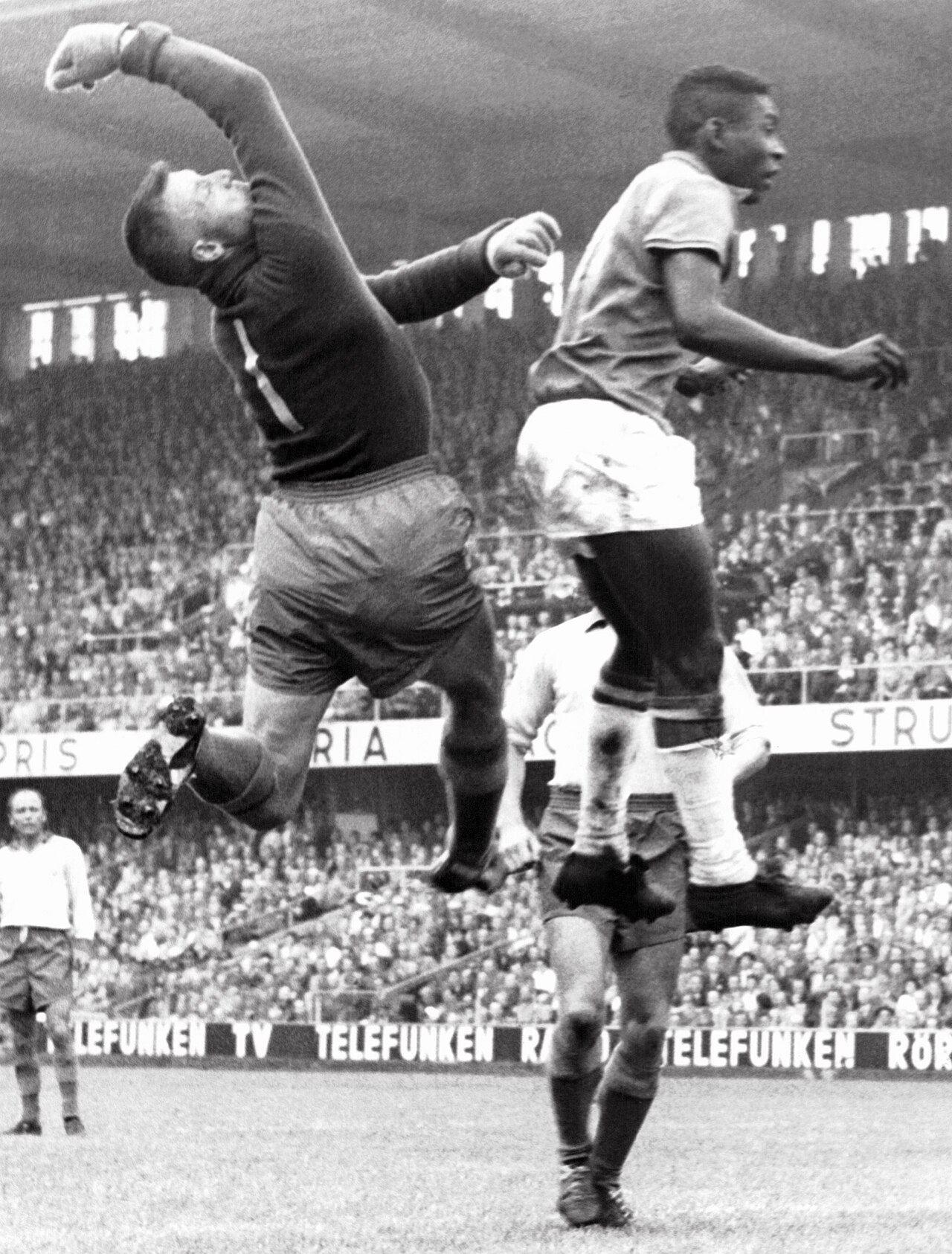
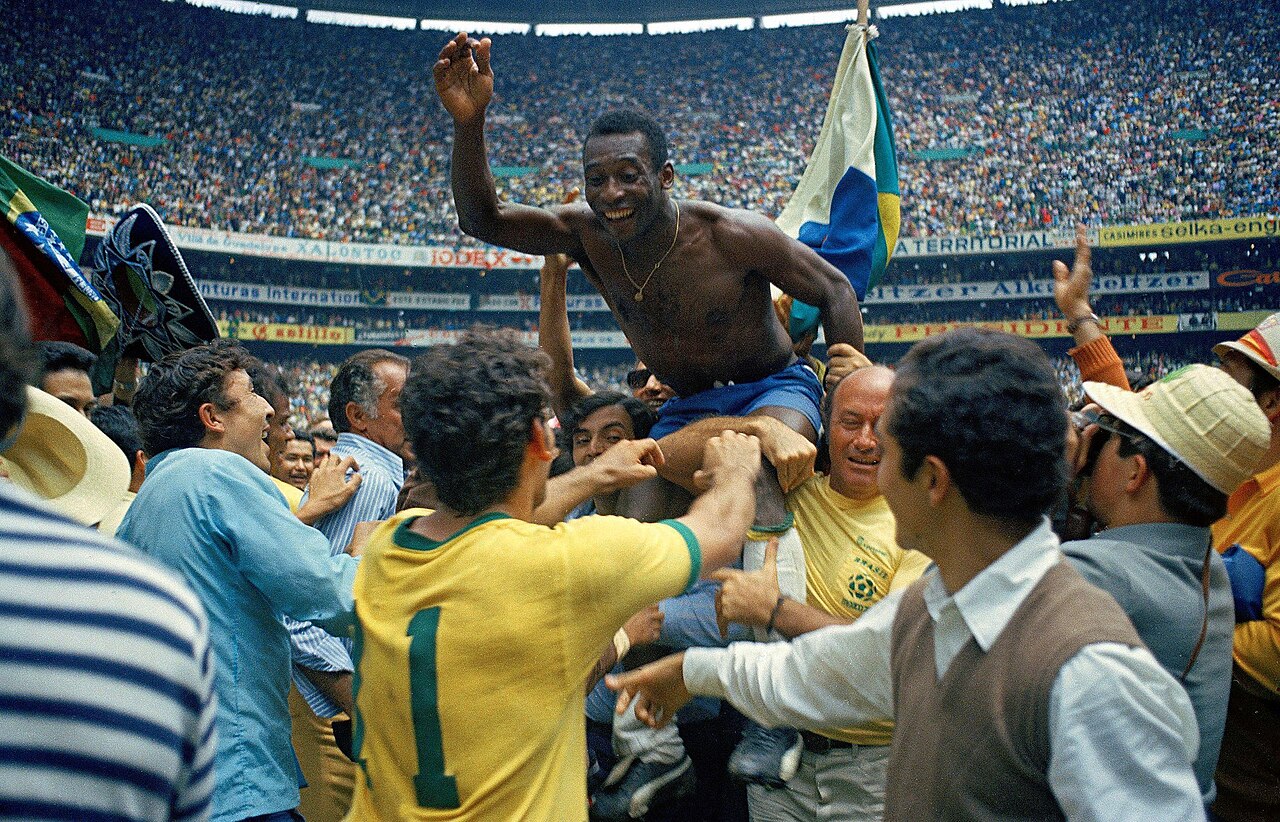
Sweden 1958 turned a club prodigy into a planetary story. Pelé was seventeen when Brazil lifted the Jules Rimet Trophy. He scored in the quarter-final, a hat-trick in the semi-final against France, and two more in the final against the hosts. The image of a teenager crying on the pitch still travels as a founding myth of the World Cup. Vicente Feola’s side played with joy that looked new to European eyes. Garrincha, Didi, Vavá, and a skinny inside forward shared one idea: attack without apology. Chile 1962 should have been a coronation lap. Injury in the group stage stole his tournament and handed the stage to Garrincha. Brazil still won, which complicated later arguments about who carried whom. Mexico 1970 settled the argument in color. The yellow shirt, the black-and-white ball, and the Azteca heat produced the team many still call the most beautiful. Pelé opened the final against Italy with a header. Carlos Alberto finished the fourth goal after a move that began with patience and ended with a thunderous right foot. Jairzinho, Tostão, Gerson, and Rivelino orbited a number ten who no longer needed to dribble every defender. He dropped deep, pointed, and still arrived for the leap. Three World Cups as a winner remain unique in the men’s game. That uniqueness is why Goal King is more than a scoring nickname. It is a tournament record that later superstars still cannot copy. He finished with seventy-seven goals in ninety-two official matches for Brazil. Those numbers would look modern in any era. They looked impossible in an age of heavy balls and brutal tackling. We remember the jump in 1958 because it announced a body that defied ordinary timing. We remember 1970 because it announced a mind that had learned to share genius. Sharing genius is harder than scoring. Pelé learned it in public, under the heaviest shirt in sport.
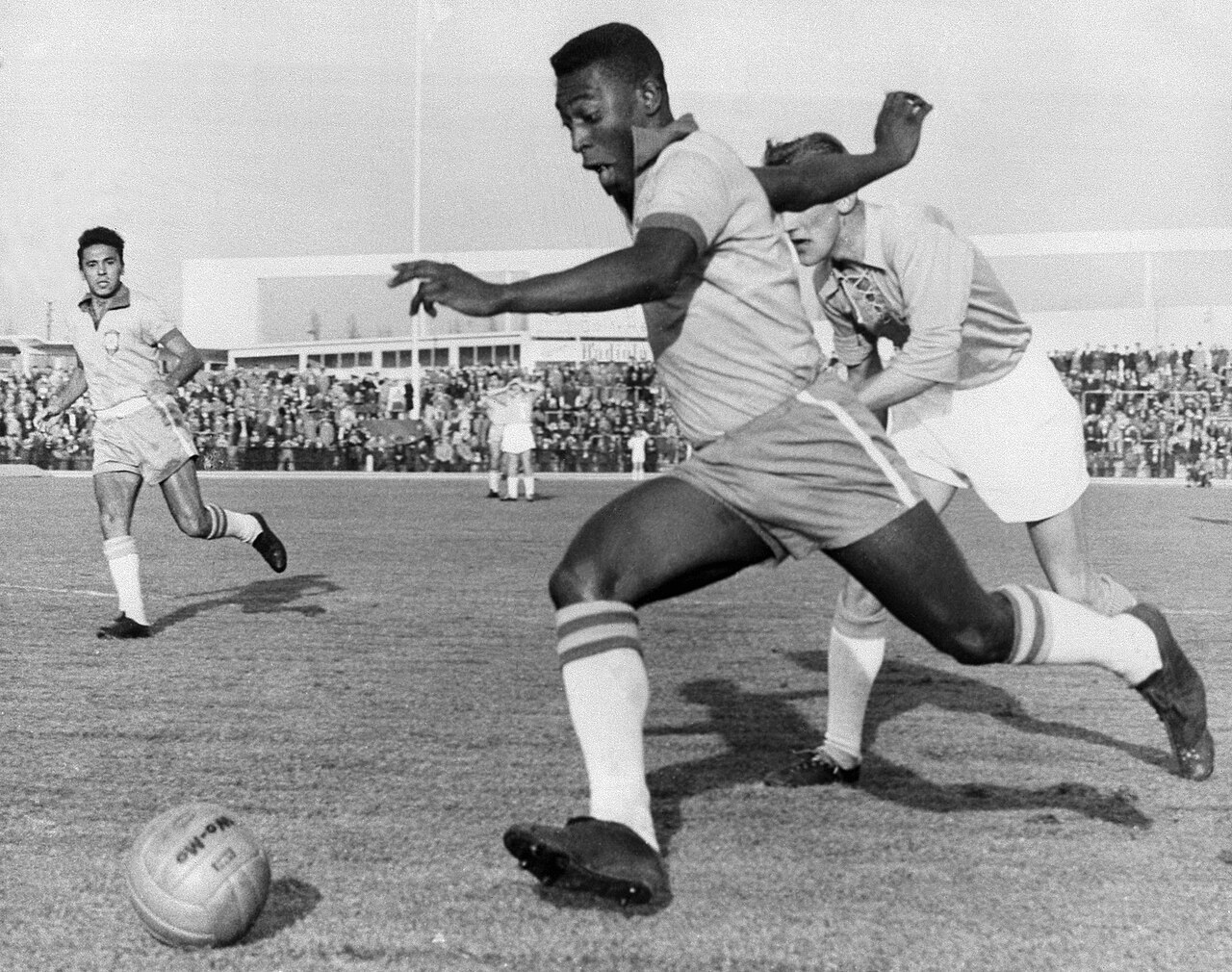
The later chapters of the life were quieter on the pitch and louder off it. New York Cosmos signed him in 1975 and turned American stadiums into classrooms. Kids who had never heard of Santos suddenly owned a number ten shirt. NASL matches against Dallas Tornado and other clubs were exhibitions with genuine sweat. A farewell in 1977 at Giants Stadium mixed Santos guests, Cosmos teammates, and a country saying thank you. He left the field as an ambassador more than a fading striker. UNESCO work, later a spell as Brazil’s Extraordinary Minister of Sport, and decades of hospital visits filled the calendar. Documentaries, commercials, and the Pelé Museum in Santos tried to archive a career that still spilled out of glass cases. He spoke about education, about the poor boy in Bauru, and about the duty of famous athletes. He also lived with the ordinary complications of family, business, and health. Comparisons with Maradona, Cruyff, and later Messi became a permanent television sport. Pelé rarely needed to join the shouting. The three stars on Brazil’s story already spoke. On 29 December 2022 he died in São Paulo at eighty-two after colon cancer and a long hospital stay. Brazil declared mourning. Santos laid him in state at Vila Belmiro. Crowds filed past as if a relative had gone. Flags at Copacabana and in Três Corações answered the same way. The Goal King title survived the obituaries because the goals were never a rumour. They were recorded, filmed, and retold by people who were there. Being there mattered in his era. Film was scarce, so each surviving clip became scripture. Scripture, in football, is a teenager leaping in Sweden and a man smiling shirtless in Mexico. Between those pictures sits a life of club loyalty that modern transfers can barely imagine. Santos was not a stepping stone. Santos was the house. The house still keeps his shirt like a relic that is also a working memory. Working memory is what Goal King means in Brazilian Portuguese when fans say O Rei. The King scored. The King also stayed. Staying is the part of the life that statistics underpay.
How should we tell Pelé’s life without turning it into a statue in a museum gift shop? Start with Bauru dust and a sock for a ball. Add a father who knew the price of wasted talent. Add Santos coaches who trusted a child with adult matches. Add Sweden, Chile’s injury, and Mexico’s yellow symphony. Add the Libertadores nights and the friendlies that padded the goal mountain. Add the Cosmos years that planted football in places that had treated it as a curiosity. Add the minister, the museum, and the hospital in 2022. Do not skip the debates about official totals. Debates are part of being the Goal King. Some federations count only competitive matches. Santos counted the tours that paid the club’s bills and spread the gospel. Pelé lived inside both ledgers. Living inside both ledgers is why the nickname outgrew any single spreadsheet. Spreadsheets cannot show the pause before a dummy. They cannot show a stadium inhaling when he shaped to shoot. They cannot show a generation of Brazilian children who believed the yellow shirt was a birthright of beauty. Beauty in his game was not only flair. It was timing, leaping, and a finish with the instep that looked simple and was not. Simple-looking excellence is the hardest excellence to copy. Copying him produced thousands of number tens and only one Pelé. One Pelé was enough to redraw what a forward could be. Forwards after him were allowed to drop, create, and still be judged as scorers. That permission is a quiet inheritance. Inheritance is why this life still belongs on a football blog in sixteen languages. The story is not local. The story is the template. The template begins in Minas Gerais and ends in the world’s memory. Memory now includes grief. Grief, for a Goal King, sounds like a crowd that does not want the whistle. The whistle came in December 2022. The matches did not stop in the mind. In the mind he is still seventeen in Stockholm and still thirty in Mexico. That double image is the life. We keep both. We keep the goals. We keep the boy. We keep O Rei.
So the life of Goal King Pelé is a childhood, a club, three World Cups, and a long encore of service. It is 1281 goals in the Santos count and 757 in stricter official lists, depending on who is holding the calculator. It is seventy-seven for Brazil and a unique triple crown of World Cups. It is Vila Belmiro on a Sunday and the Azteca on a Monday of history. It is a nickname that began as a tease and became a title. It is Dondinho’s son refusing to waste the gift. It is Celeste’s worry turning into pride. It is African and European tours that made Santos a travelling national team. It is New York discovering that football could fill a stadium without an American playbook. It is a museum that still cannot hold the jump. It is a funeral that felt like a final. It is children in 2026 who know the name before they know the footage. Footage then teaches them why the name was loud. Loud is not the same as hollow. Hollow stars fade when the advertising ends. Pelé’s advertising ended. The goals did not. The goals are why Goal King remains the right headline. Headline, life, and legend finally agree. They agree in Três Corações. They agree in Santos. They agree in any language that has a word for goal. This language, today, is remembrance with facts. The facts are enough. The facts are a boy, a ball, and a planet that learned to count in Brazilian. Counting still ends at Pelé more often than historians expected. Expectation lost. The King won. The life is the record of that winning. Read it again when a new scorer is called a king too early. Then watch 1958. Then watch 1970. Then say the name properly. Edson Arantes do Nascimento. Pelé. Goal King. O Rei. The life is complete and somehow still in play. In play is the nicest thing football can say about the dead. We say it here. We say it for the jump, the finish, and the smile on a teammate’s shoulders. We say it because a Goal King taught the sport how high a life can leap.
Três Corações still paints his birth house as a pilgrimage stop. Bauru’s dusty lots remain the first stadium in the official myth. Santos tourists ask for row seats that face the old number ten walk. Vila Belmiro’s museum cases hold boots that look too small for the legend. Swedish newspapers from 1958 still read like love letters in print. French defenders from the semi-final became trivia answers overnight. Italian marking in 1970 was serious and still not enough. Carlos Alberto’s final strike is the period at the end of Pelé’s World Cup sentence. Jairzinho scoring in every 1970 match made the court around the king look royal too. Garrincha’s 1962 heroics sit beside Pelé’s injury as a shared Brazilian miracle. Libertadores nights in the early sixties taught Europe that Santos was not a curiosity. Benfica learned the header. Milan learned the movement. Both learned the name. Cosmos friendlies doubled as sermons for a country still learning the offside law. Giants Stadium in 1977 cried in a language football had just taught it. UNESCO speeches used the same smile the Azteca knew. The sports ministry years were imperfect and still a public attempt at giving back. Hospital updates in late 2022 gathered a planet into a waiting room. Santos laid the coffin on the grass like a last home fixture. Copacabana sand held flags that did not need instructions. Historians will keep splitting official and unofficial goals. Fans will keep adding the tours because they were there in their parents’ stories. Both counts still tower over ordinary greatness. Ordinary greatness does not invent a title like Goal King. The title stuck because the finishing never looked accidental. Accidental scorers do not win three World Cups. Three World Cups remain the sentence nobody else can finish. Unfinished for rivals, finished for Brazil. Brazil’s memory treats him as a founding father of joy. Joy is the political fact of his football. Politics later used his fame, and fame outlived the politics. Outliving politics is another way to spell popular immortality. Immortality here is practical: clips, shirts, and children named Edson. Children named Edson still hear the nickname first. The nickname is shorter than the birth name and larger than both. Larger than both is the life. The life now belongs to anyone who has ever chased a bouncing ball.
